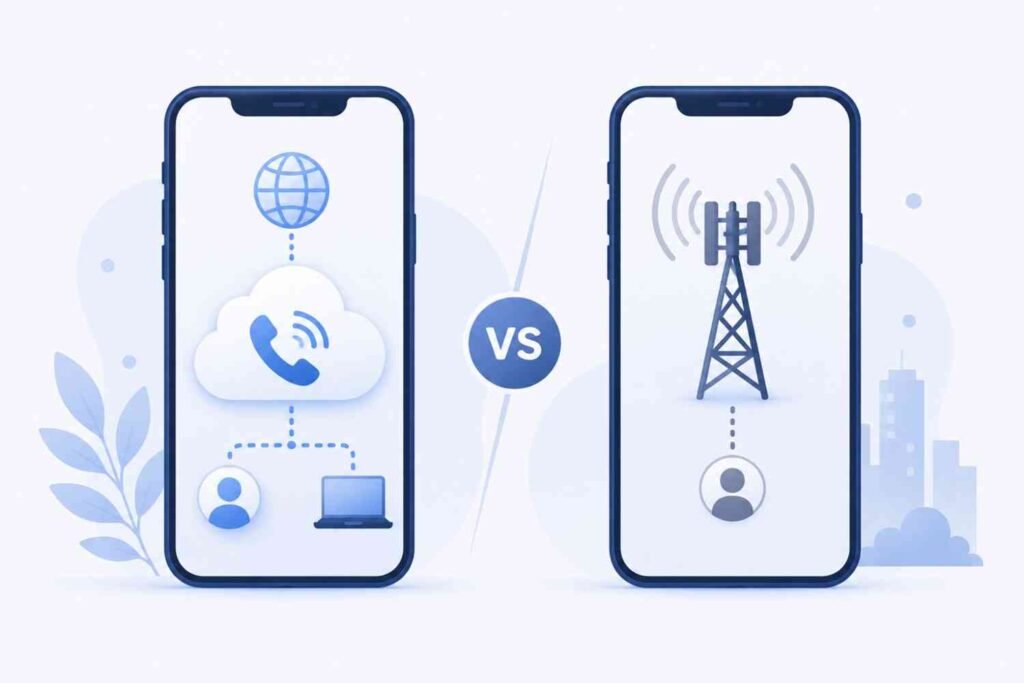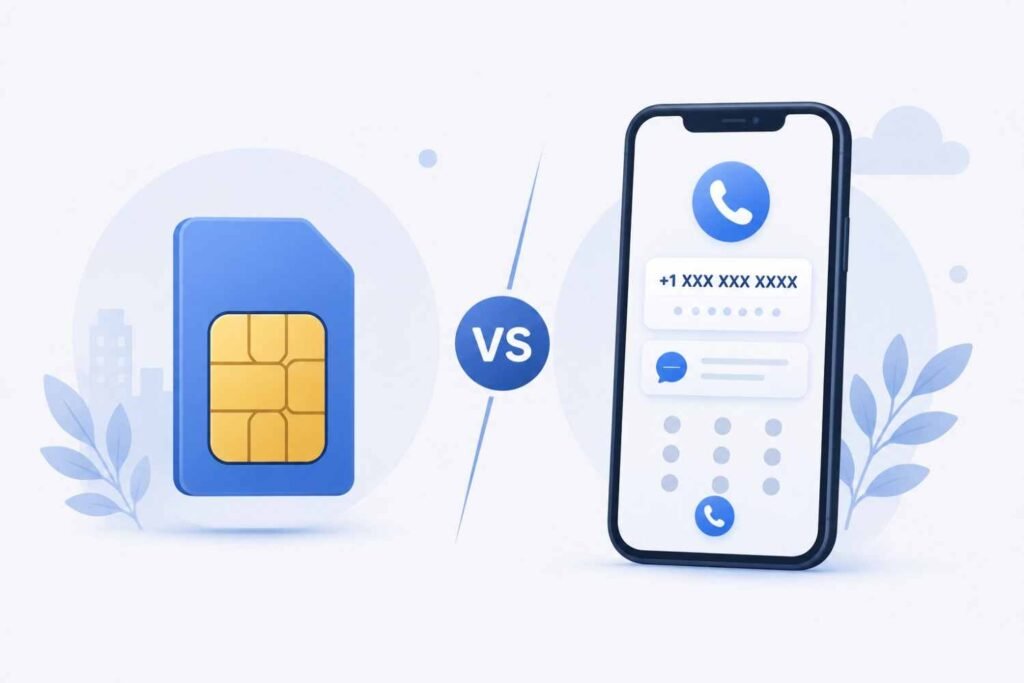
Deciding between virtual numbers vs SIM cards comes down to infrastructure at its core. A SIM card ties to a physical chip and a carrier plan. A virtual number runs entirely through an app instead, with no physical component involved. That single distinction changes almost everything about how each one works.
How a Physical SIM Works
A SIM card requires carrier activation first. It also needs a compatible device slot to insert into. Consequently, setup takes longer than most digital alternatives on the market today. Once active, though, it behaves exactly like a standard phone line, with no ongoing app dependency.
How a Virtual Number Works
A virtual number skips physical activation completely. Instead, you manage everything through software on your existing device. Setup finishes in minutes, not days. You never need a store visit or a mailed card waiting to arrive before you can start using the number.
Virtual Numbers vs SIM Cards: A Direct Comparison
|
Factor |
Physical SIM |
Virtual Number |
|---|---|---|
|
Setup |
Carrier activation required |
Instant, app-based |
|
Device requirement |
SIM slot needed |
Works on any device |
|
Portability |
Tied to one device |
Accessible from any device |
|
Best for |
Primary personal number |
Verification, privacy |
When Each Option Makes Sense
For your everyday number, a physical SIM remains the standard choice. It behaves exactly like a normal phone line, which matters for daily use. That said, when comparing virtual numbers vs SIM cards for one-off signups, the virtual number wins on speed. See our post on VoIP vs non-VoIP numbers for how number type affects verification success further. Our guide on temporary vs long-term numbers covers how long you might actually need access, too.
The Bottom Line
Neither option replaces the other entirely, since each serves a genuinely different purpose. Many people keep a physical SIM for personal use. They add a virtual number for everything else, especially signups they’d rather keep separate.
FAQs
Can a virtual number receive calls, not just texts? Yes, most services support both calls and texts equally well.
Is a virtual number less reliable than a SIM? Not inherently, since reliability depends more on the provider than the format itself.
Do I need a separate device for a virtual number? No, it typically runs through an app on a device you already own.
Can I switch between a SIM and a virtual number easily? Yes, they operate independently, so switching or using both simultaneously causes no conflict.