If you need a number for verification, business use, or privacy, you’re generally choosing between a virtual number and a physical SIM card. Both let you send and receive texts and calls, but they work through fundamentally different infrastructure, and that difference shapes where each one makes sense.
How a Physical SIM Card Works
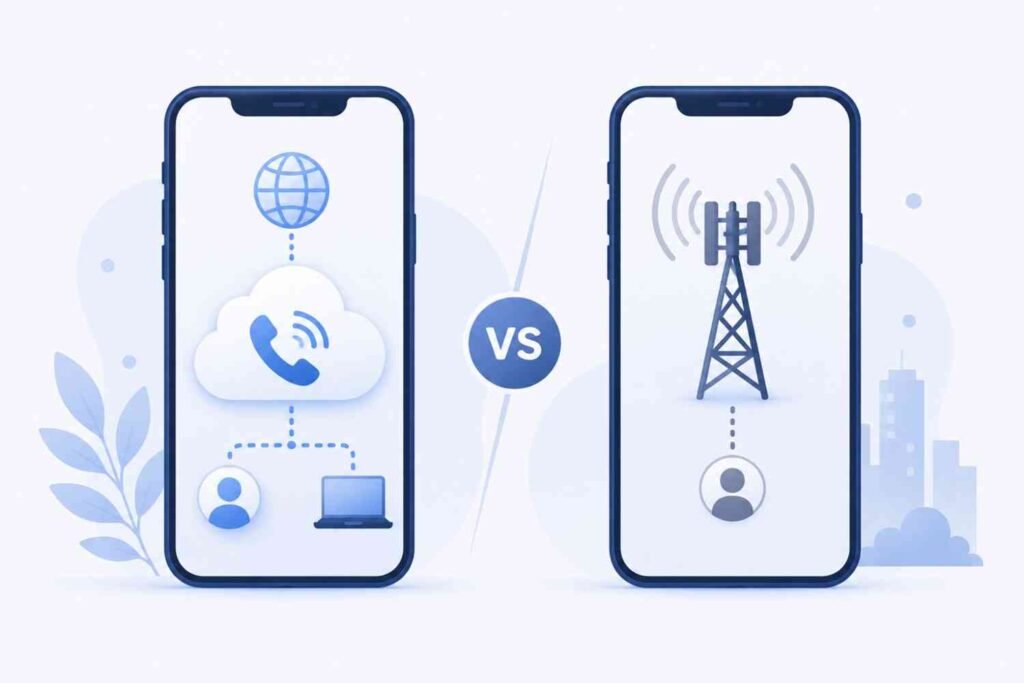
A physical SIM card ties a number directly to a small chip inserted into a device. The carrier assigns the number to that specific SIM, and it works through traditional cellular network infrastructure. Getting one usually means visiting a carrier store or ordering a card by mail, activating it, and inserting it into a phone.
This is the number type most people already use for their primary personal phone.
How a Virtual Number Works
A virtual number isn’t tied to a physical chip at all. Instead, it operates through software, letting you send and receive messages or calls via an app rather than a SIM slot. Virtual numbers can run entirely on your existing phone, without needing a separate device or physical card.
Because virtual numbers don’t require the same physical provisioning process, they’re typically faster to obtain and easier to manage across multiple accounts.
Key Differences in Practice
| Factor | Physical SIM Card | Virtual Number |
| Setup process | Requires physical card and carrier activation | Software-based, typically instant |
| Device requirement | Needs a SIM slot or dedicated device | Works through an app on existing devices |
| Flexibility | Tied to one physical device | Easier to manage multiple numbers at once |
| Common use case | Primary personal number | Verification, privacy, business use |
| Portability | Requires physical SIM swap to change devices | Accessible from any device with the app |
When a Physical SIM Makes More Sense
For your primary, everyday number, one you give to family, use for banking, and expect to keep for years, a physical SIM tied to a standard mobile plan remains the more conventional and often more cost-effective choice, especially when bundled with a broader phone plan.
When a Virtual Number Makes More Sense
Virtual numbers work well when you want to separate a specific use case from your main line entirely. Common situations include:
- Verifying accounts you don’t want linked to your primary number.
- Managing multiple numbers without needing multiple physical devices.
- Keeping a business or project-specific number separate from personal contacts.
- Avoiding the need to hand out your primary number for one-off signups.
A Note on Number Type Within Virtual Numbers
Not all virtual numbers behave identically once you’re using them for verification. As covered in our VoIP vs. non-VoIP comparison, virtual numbers built on non-VoIP infrastructure generally get accepted more consistently by platforms with strict verification requirements, compared to app-based VoIP numbers.
The Bottom Line
Physical SIM cards and virtual numbers aren’t competing for the exact same purpose. A SIM card suits your primary, long-term personal number, while a virtual number suits situations where flexibility, separation from your main line, or multi-account management matters more. Many people end up using both, one for personal use, one or more virtual numbers for everything else.
Frequently Asked Questions
Can a virtual number receive calls, not just texts?
Yes, most virtual number services support both calls and texts, though specific features vary depending on the provider.
Do I need a separate device to use a virtual number?
No. Virtual numbers typically work through an app installed on a device you already own, without requiring a separate phone or SIM card.
Is a virtual number less reliable than a physical SIM card?
Not inherently. Reliability depends more on the specific provider and number type (VoIP versus non-VoIP) than on the virtual-versus-physical distinction itself.
Can I use a virtual number as my only phone number?
Some people do, though most use virtual numbers for specific purposes like verification or business use, while keeping a physical SIM for their primary personal number.