Every phone number ultimately routes through some kind of infrastructure. Still, mobile carrier numbers vs app-based numbers represent two very different approaches underneath. Each comes with its own distinct trade-offs, especially once verification enters the picture.
What Defines a Carrier Number
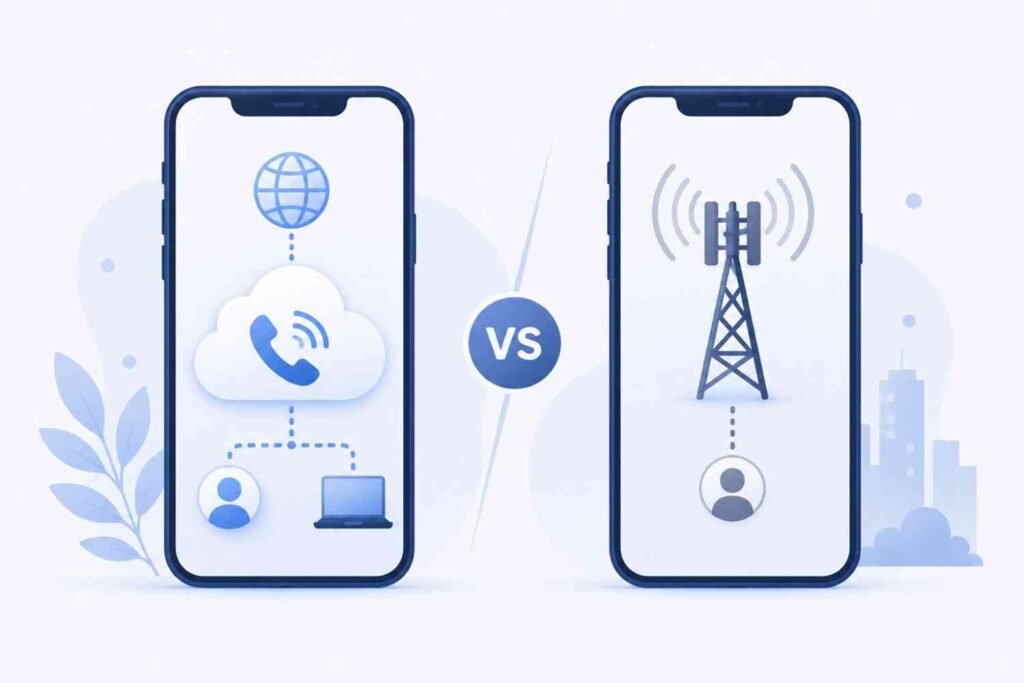
A mobile carrier number connects through traditional cellular towers, whether via a physical SIM or an eSIM. Because it uses real infrastructure, it’s genuinely harder to mass-produce than the alternative. That difficulty translates directly into trust from verification systems.
What Defines an App-Based Number
An app-based number, instead, routes calls and texts over the internet. It uses VoIP-style technology packaged neatly inside an app. Setup takes seconds, but the underlying trust signal looks weaker to most fraud-detection systems.
Carrier vs App-Based: Comparison
|
Factor |
Carrier Number |
App-Based Number |
|---|---|---|
|
Infrastructure |
Cellular network |
Internet-based |
|
Platform acceptance |
Generally stronger |
Often flagged |
|
Setup speed |
Slower, requires provisioning |
Instant |
Why Carrier Numbers Hold Up Better
As covered in our VoIP vs non-VoIP comparison, strict platforms specifically check for carrier-backed signals during signup. Therefore, mobile carrier numbers vs app-based numbers decisions clearly favor carrier numbers for verification-heavy use cases. Casual, low-stakes tasks are a different story entirely.
The Bottom Line
Carrier numbers offer stronger, more consistent verification results overall. App-based numbers offer speed and zero setup instead, which suits casual use just fine. Match your choice to what you’re actually trying to accomplish.
FAQs
Are app-based numbers always VoIP? Almost always, yes, since that’s the underlying technology that makes them work.
Do carrier numbers cost more than app-based numbers? Often, yes, since they involve more infrastructure and overhead behind the scenes.
Can app-based numbers pass strict verification checks? Sometimes, but far less consistently than carrier-backed numbers can manage.
Why do fraud systems trust carrier numbers more? Because carrier infrastructure is harder and costlier to fake at scale.