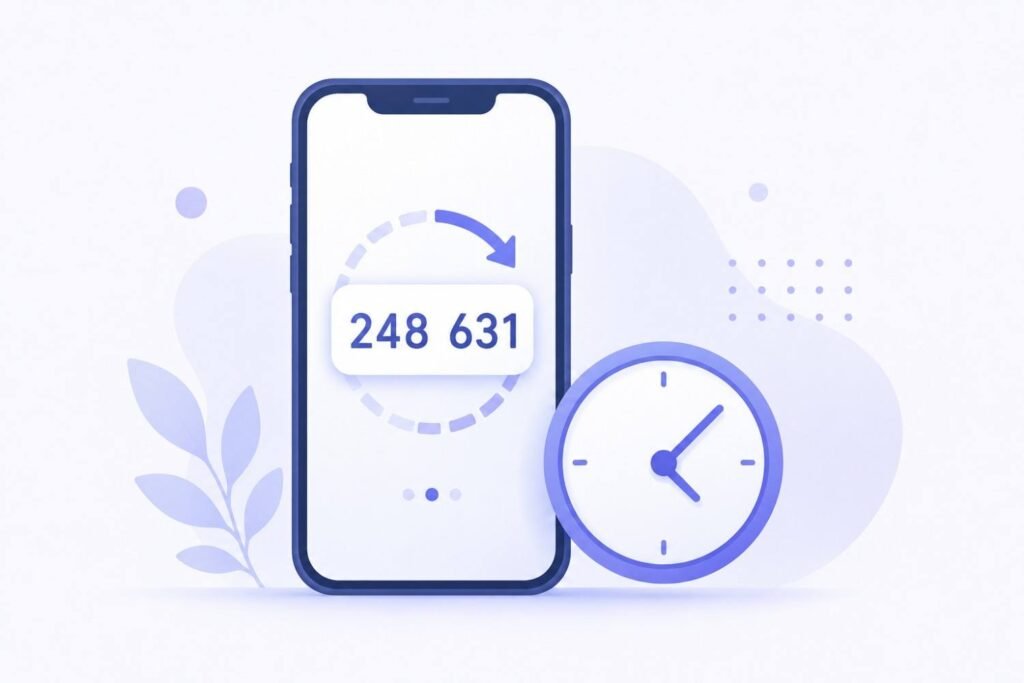
If you’ve ever typed a verification code a few seconds too late and had it rejected, you’ve run into one of the defining features of OTPs: they don’t last long. This isn’t a flaw or an inconvenience added without reason. It’s a deliberate security design choice, and understanding why makes the short expiration window feel a lot less frustrating.
The Security Reason Behind Short Expiration
An OTP’s entire value comes from being temporary. If codes stayed valid indefinitely, they’d function almost identically to static passwords, and carry the same long-term risk: anyone who intercepts or steals the code once could use it whenever they wanted afterward.
By expiring quickly, usually within 30 seconds to a few minutes depending on the method, OTPs limit the window during which a stolen or intercepted code has any value at all. Even if someone captures a code through interception or phishing, they need to use it almost immediately, before it expires, which significantly narrows the opportunity for misuse.
How Expiration Timing Differs by Method
Not all OTPs expire on the same schedule, since different generation methods handle timing differently:
- TOTP (app-based codes) typically refresh every 30 seconds, following the RFC 6238 standard that defines time-based one-time passwords. This tight window exists because the code’s validity ties directly to a specific time interval.
- SMS-delivered OTPs usually allow a longer window, often 5 to 15 minutes, to account for potential delivery delays. Since SMS delivery isn’t instantaneous, a 30-second expiration would cause many legitimate codes to expire before they even arrived.
- Email-delivered OTPs often use similarly extended windows, for the same delivery-delay reasons as SMS.
This difference explains why an authenticator app code expires so much faster than a text message code. The delivery method itself determines how much buffer time the system needs to build in.
What Happens When a Code Expires
An expired code simply stops working. Entering it returns an error, and you’ll need to request a new one rather than trying the same code again. This isn’t a bug or a system glitch. It’s the system correctly enforcing the temporary nature that makes OTPs secure in the first place.
If you frequently miss the expiration window, a few practical habits help:
- Enter the code as soon as it arrives, rather than switching apps or getting distracted first.
- Use an authenticator app instead of SMS if you consistently receive text messages late, since app-based codes don’t depend on message delivery timing at all.
- Keep your device’s clock accurate, since TOTP codes rely on synchronized time between your device and the server.
The Bottom Line
Short expiration windows aren’t an inconvenience bolted onto OTPs by accident. They’re the core mechanism that keeps one-time passwords more secure than static ones. The specific timing varies by delivery method, but the underlying principle stays the same: a code that can’t be reused for long can’t be exploited for long either. For a deeper explanation of how these codes get generated, see our guide on what an OTP is and how it works.
Frequently Asked Questions
Why do app-based OTPs expire faster than SMS codes?
App-based codes (TOTP) refresh on a fixed time interval, usually 30 seconds, since they’re generated locally without delivery delay. SMS codes need a longer window to account for potential delivery delays.
What happens if I enter an OTP code after it expires?
The system rejects it and you’ll need to request a new one. This is expected behavior, not an error, since expired codes are designed to stop working.
Can I extend how long my OTP code stays valid?
No, in almost all cases. Expiration timing gets set by the platform or the underlying standard (like TOTP), not by individual users.
Does a longer expiration window make SMS OTPs less secure than app-based ones?
Somewhat, yes. A longer validity window gives a potentially intercepted code more time to be misused, which is part of why app-based OTPs are generally considered more secure than SMS-delivered ones.