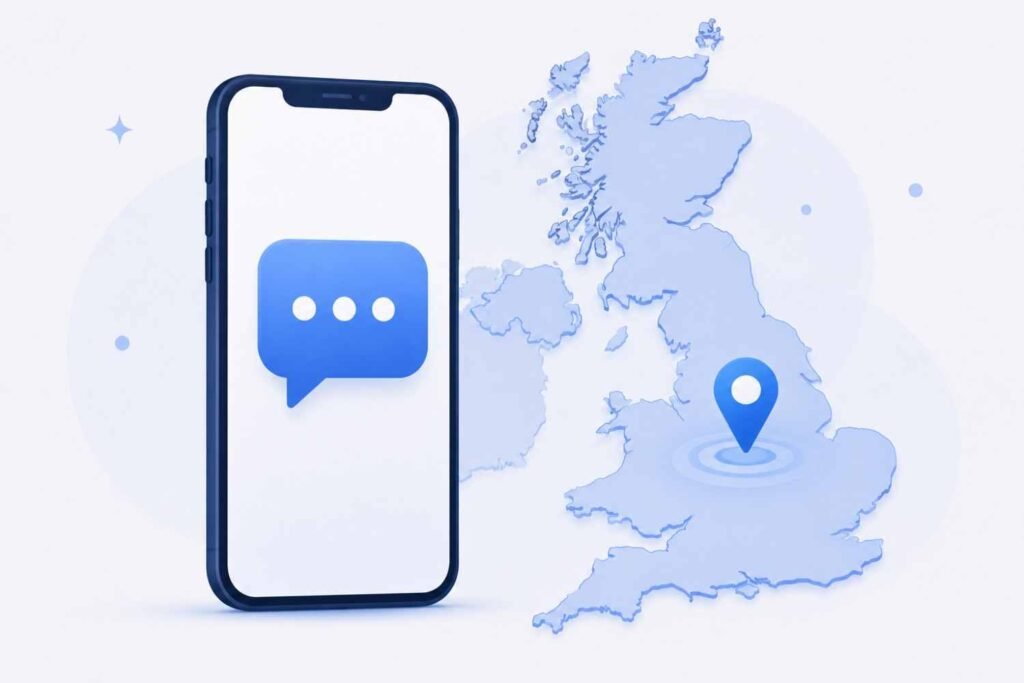
Getting SMS verification UK numbers right starts with one simple habit: dropping the leading zero. A UK number written domestically as 07XXX XXXXXX becomes +44 7XXX XXXXXX internationally. This single formatting rule causes more failed verifications than any carrier issue does.
UK Phone Number Format
The +44 country code replaces the domestic leading 0, not adds onto it. Many people mistakenly keep both, entering something like +44 07XXX XXXXXX, which fails validation on most platforms. Removing the zero entirely is the correct approach.
Regulatory Environment
Ofcom regulates UK telecommunications, including rules around unsolicited messaging. Verification codes tied to a direct user action, like a signup, generally sit outside restrictions aimed at unsolicited commercial texts. This means legitimate verification traffic usually delivers without regulatory interference.
Delivery and Carrier Behavior
UK carriers generally deliver codes quickly for domestic numbers. Delays happen occasionally during high-traffic periods. International short codes sometimes trigger carrier-side spam filtering too, which can look like a platform failure when it’s really a filtering issue.
Number Type Considerations in the UK
As with many markets, UK platforms increasingly apply stricter checks to VoIP numbers. Financial services lead this trend particularly. Our post on VoIP vs non-VoIP numbers explains the underlying reasoning behind this pattern, which applies broadly across countries, not just the UK specifically.
The Bottom Line
SMS verification UK works smoothly once the leading-zero rule becomes second nature. Combine correct formatting with an understanding of local carrier behavior, and most verification issues resolve themselves quickly. Our guide on SMS verification for international users covers related delivery challenges that extend beyond the UK too.
FAQs
Do I remove the zero or keep it when adding +44? Remove it entirely — the +44 replaces the domestic 0, it doesn’t sit alongside it.
Does Ofcom regulate verification codes directly? Not specifically, since Ofcom’s rules mainly target unsolicited commercial messaging, not user-triggered verification.
Do UK platforms reject VoIP numbers like US ones do? Increasingly, yes, particularly for banking and financial services.
Why might a UK verification code arrive late? Carrier-side spam filtering sometimes delays messages from unfamiliar international short codes.